Grillex
July 24, 2026
In modern interior architecture and luxury furniture design, metal is more than a structural material—it is a defining design element. From sleek brass-toned partition screens and elegant dining table frames to durable balcony grills, metal details shape the look and feel of contemporary homes and commercial spaces. Yet raw or traditionally painted metal is vulnerable to scratching, chipping, corrosion, and fading over time.
Enter PVD coating—a cutting-edge surface treatment technology that has revolutionized how architects, interior designers, and homeowners approach decorative metalwork. If you have been searching for a finish that combines timeless luxury with industrial-grade resilience, understanding what PVD coating is and how it outperforms traditional methods is key to making an informed investment.
In this detailed guide, we break down the science behind Physical Vapor Deposition, explore its key benefits for metal furniture and architectural grills, compare PVD vs powder coating, and dive into the popularity of
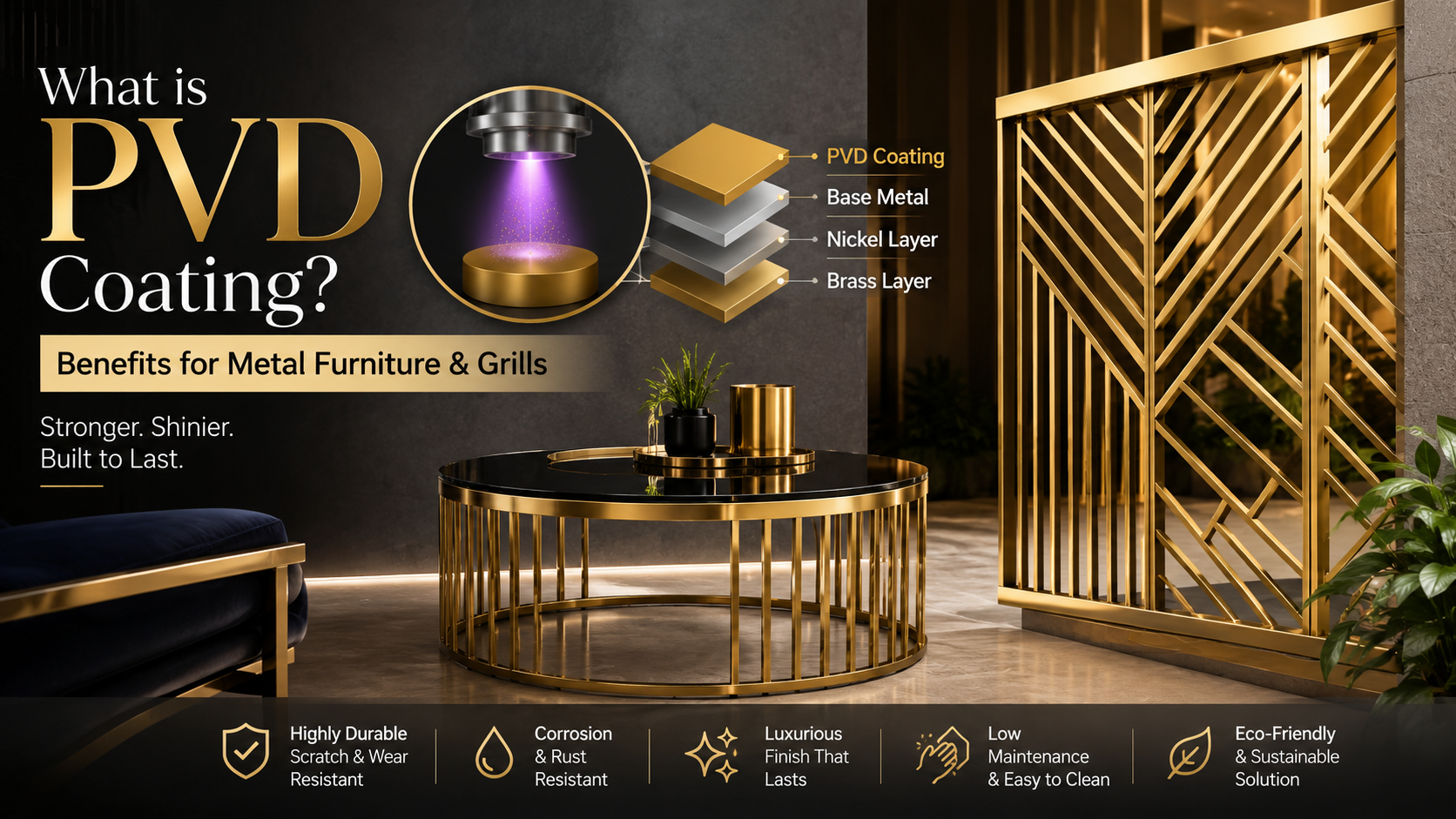
To understand why this finish is celebrated across luxury industries, we must first address the core question: what is PVD coating?
PVD stands for Physical Vapor Deposition. It is an advanced vacuum coating process in which a solid target material (such as titanium, zirconium, or chromium) is vaporized at a atomic level into a plasma state within a high-vacuum chamber. This vaporized material then condenses atom-by-atom onto the substrate metal (most commonly Stainless Steel grade 304 or 316), forming an exceptionally thin, dense, and tightly bonded film.
Unlike traditional wet painting or electroplating—which merely deposit a surface layer on top of metal—PVD coating actually embeds itself into the surface structure of the substrate at a molecular level.
Because the process takes place in a clean, controlled vacuum environment, the resulting finish is completely smooth, uniform, free of pinholes, and chemically inert.
Investing in metal furniture or safety grills requires balancing visual elegance with long-term performance. Here are the primary reasons why PVD coating has become the gold standard in premium design:
One of the greatest advantages of PVD technology is its exceptional durability. Because the coating bonds at an atomic level, it will not flake, peel, chip, or blister over timeOn the Vickers hardness scale, a PVD layer routinely measures between 1800 HV and 3000 HV. That makes it four to five times harder than chrome plating or stainless steel alone.
This extreme surface hardness translates directly to superior resistance against:
Traditional paints and lacquers degrade when exposed to sunlight, turning dull or yellow within a few years. PVD coatings are completely UV-stable. Whether installed on an outdoor balcony grill or next to a sunny floor-to-ceiling window, the color remains vibrant and true for decades without fading.
PVD coating allows manufacturers to replicate the look of costly precious metals—such as gold, rose gold, bronze, brass, and dark titanium—on high-strength stainless steel. It can be applied over brushed, satin, mirror-polished, or textured metal surfaces, preserving the underlying texture while adding rich, radiant color.
Environmental sustainability is a growing priority in home design. Traditional electroplating generates toxic chemical effluents, heavy metal waste, and dangerous fumes. In contrast, PVD coating is an environmentally sustainable process. It produces zero hazardous waste, no toxic emissions, and uses no harmful solvents, making it safer for both manufacturing technicians and the planet.
PVD finishes do not require special polishes or aggressive chemical cleaners. Because the non-porous surface prevents dust, grease, and moisture from penetrating, routine cleaning requires nothing more than a soft microfiber cloth dipped in mild soap and warm water.
When choosing a protective finish for architectural metalwork or custom furniture, buyers frequently weigh PVD vs powder coating. While both techniques serve to protect metal, their manufacturing methods, performance capabilities, and aesthetic results are vastly different.
Powder coating is applied by electrostatically spraying a dry polymer powder onto a metal surface. It is then cured under heat. While cost-effective for general industrial uses, it creates a significantly thicker, organic layer that lacks the metallic brilliance and atomic adhesion of PVD.
Here is a side-by-side comparison to help you evaluate PVD vs powder coating:
| Feature / Metric | PVD Coating (Physical Vapor Deposition) | Powder Coating |
| Bonding Type | Atomic/Molecular level bond in a vacuum chamber | Electrostatic surface adhesion cured with heat |
| Coating Thickness | Ultra-thin (0.2 to 5 microns); preserves underlying metal texture | Thick (50 to 120+ microns); can obscure intricate metal details |
| Surface Hardness | Extremely High (1800 – 3000 HV); highly scratch-resistant | Moderate; susceptible to scratching under sharp objects |
| Chipping & Peeling | Virtually impossible due to atomic integration | Can chip, crack, or peel if impacted or flexed |
| Corrosion Resistance | Superior; highly resistant to moisture, salt air, and chemicals | Good, but moisture can seep under if surface is scratched |
| Metallic Luster | True metallic sheen (Mirror, Satin, Brushed, Antique) | Opaque, plastic-like, or painted appearance |
| UV & Fade Resistance | Exceptional; zero fading under intense sunlight | Moderate to low; prone to fading/chalking over time |
| Environmental Impact | 100% Eco-friendly, zero toxic runoff or VOC emissions | Moderate; low VOCs, but creates powder waste |
| Lifespan | 20+ Years to Lifetime with minimal care | 5 to 10 Years before repainting may be required |
| Best Application | High-end interior furniture, luxury partitions, PVD grills | Industrial frameworks, utility racks, low-cost outdoor gates |
As shown in the table above, while powder coating is suitable for everyday structural work, PVD coating is unquestionably superior for high-touch interior furniture, luxury grills, and architectural accents where visual perfection and long-term durability are paramount.
Among all available finishes, gold PVD coating furniture has seen an explosive rise in demand across contemporary interior design. Traditionally, achieving a gold metallic look in furniture required electroplating with real gold (which is extremely soft, expensive, and easily damaged) or applying liquid gold paint (which looks dull and chips quickly).
PVD technology solves this problem by using Titanium Nitride (TiN) or Zirconium Nitride (ZrN) target materials inside the vacuum chamber to produce an authentic, brilliant gold luster that possesses industrial-grade scratch resistance.
Safety grills, balcony railings, and window security screens have traditionally been regarded as utilitarian necessities that often detract from a building’s beauty. Standard iron or mild steel grills require constant sanding, repainting, and rust treatment every few seasons.
Upgrading to a high-grade stainless steel PVD-coated grill completely transforms how safety elements integrate into your home’s design.
When investing in custom PVD architectural elements, precision engineering and material authenticity are non-negotiable. At Grillex (Kolkata), we combine craftsmanship, advanced fabrication technology, and strict quality control to deliver high-end architectural solutions.
Here is why designers, architects, and homeowners trust Grillex for their bespoke PVD projects:
Yes. PVD coating forms an atomic bond with the underlying stainless steel substrate. Under normal residential and commercial use, the coating will not peel, chip, or flake.
The PVD coating itself cannot rust because it does not contain iron. Furthermore, when applied over corrosion-resistant grade 304 or 316 stainless steel, it creates an impenetrable barrier that protects the substrate from atmospheric oxidation and moisture.
Cleaning is simple: use a soft microfiber cloth dampened with warm water and a tiny drop of mild dish soap. Avoid using abrasive scouring pads, steel wool, or strong acidic chemicals (like bleach or ammonia), as harsh abrasives can scratch the protective surface over time.
PVD technology offers a rich spectrum of metallic colors that remain vibrant over time. The most popular choices include Mirror Gold, Brushed Gold, Rose Gold, Champagne Gold, Bronze, Copper, Antracite/Titanium Black, and Chrome/Silver. Because the finish can be applied over brushed, polished, or textured stainless steel surfaces, you can achieve both high-gloss reflective or soft matte aesthetics.
Because PVD coating is integrated at an atomic level inside a vacuum chamber, it cannot be touch-up painted or spot-repaired on-site with liquid spray cans. However, given its extreme hardness (1800 to 3000 HV), deep scratches from daily household use are virtually unheard of. If severe structural damage occurs due to heavy industrial impact, the component must be professionally stripped and re-coated in a specialized PVD chamber.
Yes, PVD coating is 100% non-toxic, hypoallergenic, and chemically inert. It releases zero volatile organic compounds (VOCs) and does not off-gas toxic substances over time, making it completely safe for indoor furniture, residential balcony grills, dining tables, kitchen fittings, and high-touch architectural surfaces.
Whether you are designing a high-end luxury home, renovating a commercial office, or installing long-lasting balcony grills, PVD coating offers the ultimate synergy of strength, safety, and elegance.
Explore our full range of custom architectural solutions on our PVD Coated Grill Product Page or contact our team of design experts today to discuss your project requirements.
Ready to transform your space with premium PVD-coated metal furniture, railings, partitions, and decorative grills? Our experts are here to help you choose the perfect design and finish for your home or commercial project.
Whether you need a custom solution, a price estimate, or expert guidance, we’re just a call or message away.
📞 Phone: +91 83369 08118
📍 Address:
Ashiana, AA-48, Near PNB, Salt Lake Sec – 1, Kolkata – 700064
📧 Email:
subrata.ash@gmail.com
Visit Grillex.in or contact our team today to schedule your FREE CONSULTATION and receive a customized quote for your project.

 Ashiana
 Promiplast
 Premium Bathware